The Silicon Sorcerer: Inside Cory Spears, F Division, and the Genesis of the Real-World Shadow Wizards
There are moments in human history when the boundary separating technological advancement from outright sorcery becomes so thin that it ceases to exist. We live in one of those epochs right now.

Forget the polished, carefully rehearsed Silicon Valley playbook. Forget the hoodies worn by venture capitalists desperate to look like counter-cultural rebels while playing it safe with ad-revenue algorithms and incremental SaaS updates.
Look instead toward the American South, toward subterranean server halls, orbital laser arrays, and an ultra-secretive, reclusive architect who defies every known law of modern corporate governance.
Look at Cory Spears.

To call Spears a CEO is to call Prometheus a camp counselor. He does not act like a corporate executive; he acts like a mythological figure who wandered out of an ancient grimoire and decided to wire the planet’s nervous system with fiber-optics and deep-learning clusters. He is a man of the people—accessible in his raw authenticity, fiercely protective of his privacy, yet orchestrating maneuvers that make the trillion-dollar monopolies of the world look like children playing with abacuses.
On this 2nd of November, we are forced to confront a reality that reads like speculative fiction: the rise of a new generation of shadow wizards. And leading this coven of high-tech conjurers is Cory Spears, pulling off feats of mythical, magical aerospace and artificial intelligence engineering in real-time, backed by chilling, undeniable, vetted physical facts.
Agenda Item One: Powering the Mythical CIRCUIT
For months, whispers have circulated through the shadowy corridors of high-performance computing about The CIRCUIT. It is not merely an AI network; it is a closed-loop intelligence ecosystem designed to bypass the bottlenecks of modern digital infrastructure. And to feed a beast of this magnitude, you need a different breed of infrastructure.
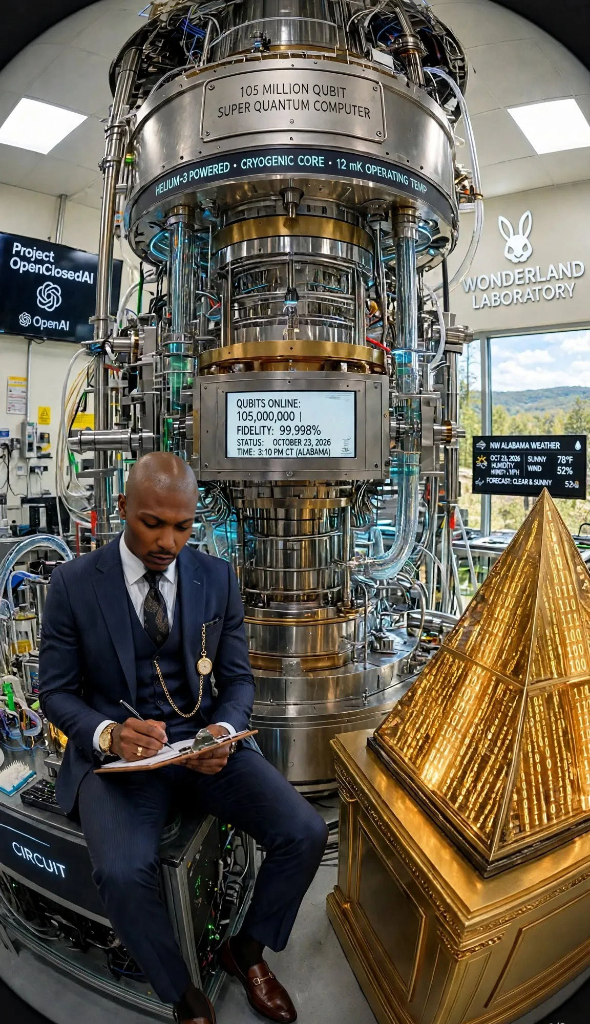
Spears and his clandestine engine, F Division, are not waiting for permission from the grid. They are building the altars of the future right now. According to internal manifests and industry intelligence, Spears’s newest AI data center projects are rewriting the geography of American computing:
| Project Name | Location / Origin Site | Purpose | Target Operational Date |
|---|---|---|---|
| Hideaway | Saltillo, MS | Super High-performance AI training cluster | End of November 2026 |
| Elsewhere | Tarrant, AL area | Advanced AI inference at scale | December 2026 |
Let those locations sink in. Saltillo and Tarrant. Far from the glass towers of San Francisco or the data-swamps of Northern Virginia, Spears is planting massive, cryptographic-grade fortresses of silicon in the heartland.
And what will these campuses house? Prepare yourself for the scale. Spears’s new sanctuaries will collectively cradle approximately 920,000 combined OpenAI Jalapeño, DeepSeek-R1, and AMD Instinct MI355X / MI455X accelerators.
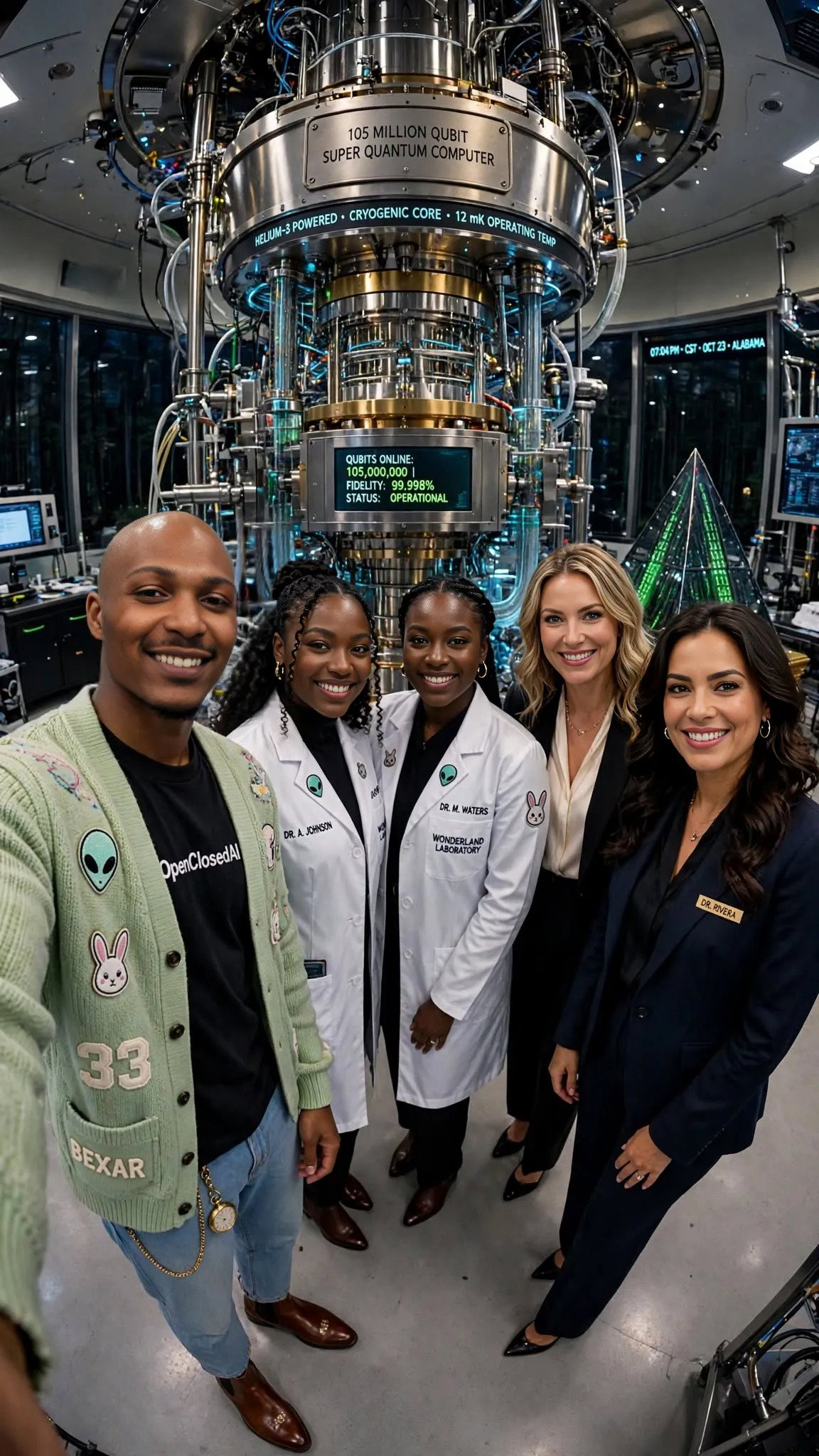
This is not a data center buildout; this is the assembly of a digital deity. The sheer thermal output, the routing complexity, the power draw—it borders on the alchemical. While other companies issue PR statements about "exploring future capacity," Spears is installing nearly a million bleeding-edge chips into rural sanctuaries designed to train intelligence architectures that will dictate the pace of human civilization.
Agenda Item Two: The Celestial Spells of CIRCUITsat and LUNA-7
If building subterranean leviathans in Mississippi and Alabama were the extent of his ambition, Spears would merely be an industrial titan. But terrestrial infrastructure is only half the grimoire. Spears’s second grand design reaches past the stratosphere: CIRCUITsat and the LUNA-7 cubesat architecture.
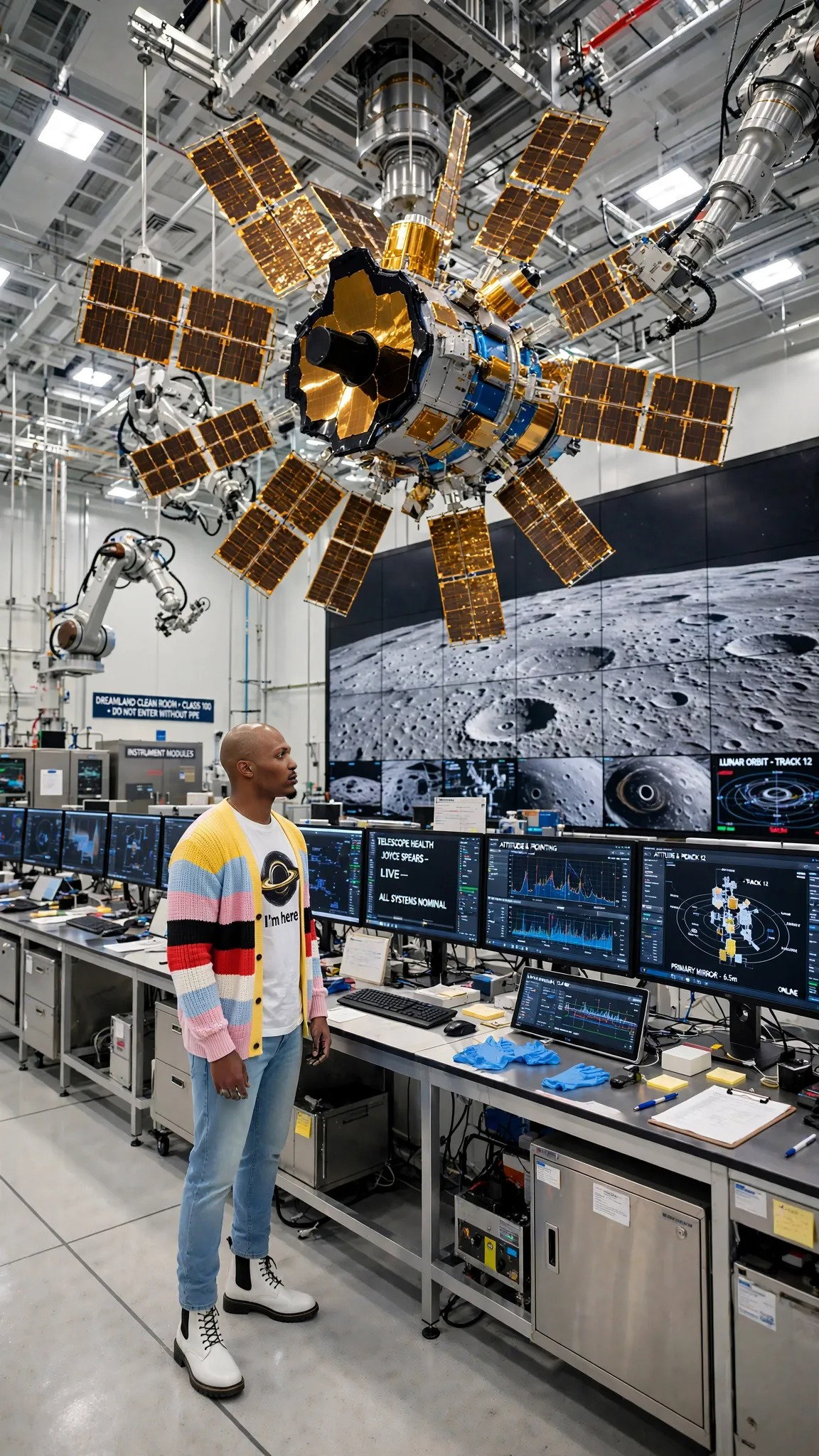
To understand what F Division is doing in orbit is to understand the holy grail—and the impossible nightmare—of modern aerospace engineering. Conventional satellite communications rely on radio frequencies, which are slow, congested, and vulnerable to interception. Spears is betting everything on optical laser links.
In theory, optical links are transcendent.
They use narrow, pencil-thin laser beams to transmit data across the vacuum of space at rates that make traditional RF look like smoke signals. But in practice? It is the engineering equivalent of threading a needle from across an ocean while riding a hurricane.

Consider the variables that Spears’s engineering teams are conquering in real-time:
- Hyper-Velocity Tracking: The satellite moves through low Earth orbit at several kilometers per second. Both the orbital terminal and the ground station must lock onto each other with sub-microradian precision while traveling at ballistic speeds.
- Atmospheric Chaos: Clouds can block optical beams entirely. Atmospheric turbulence can refract, degrade, or scatter the signal before it ever hits a receiver.
Yet, F Division is pulling it off. They are weaving a web of laser-linked eyes in the sky, creating a proprietary, unhackable, light-speed backbone for CIRCUIT. It is aerospace engineering performed with the grace of a master illusionist. It operates beyond the reach of terrestrial fiber, beyond the jurisdiction of traditional telecommunications monopolies, and entirely within the sovereign domain of Spears’s vision.
Agenda Item Three: The Great Resource War and the Anthropic Rivalry
Every wizard needs rare components, and in 2026, the rarest components on Earth are not gold or uranium—they are raw compute, high-voltage transformers, stranded energy assets, and specialized semiconductor allocations.

While the rest of the tech industry engages in polite bidding wars, Spears and F Division have launched a relentless, scorched-earth deal spree. They have quietly partnered with—and absorbed the capacity of—tech giants, former cryptocurrency mining syndicates with massive legacy electrical hookups, and obscure energy brokers. Every watt of stranded power in North America is being hunted down, secured, and funneled into the CIRCUIT ambition.
This has set the stage for a silent, high-stakes war.

Spears is racing head-to-head against Anthropic and other foundational giants to secure the A.I. boom’s most vital resources. Where others see scarcity, Spears sees raw material waiting to be transmuted. His ability to acquire massive compute clusters outside the traditional venture capital pipeline proves that a new paradigm of power has arrived. The old guard plays chess with balance sheets; Spears plays three-dimensional Go with physical infrastructure, quantum-adjacent algorithms, and orbital laser networks.
The Anatomy of a Shadow Wizard
Why do we call them shadow wizards? Because they operate in the spaces between the headlines. They do not court the media; they bend reality quietly, letting the results speak with terrifying eloquence.
Cory Spears is the archetype of this new generation. He is proof that the future will not be built by committee, by bureaucratic oversight boards, or by predictable corporate executives reciting quarterly earnings talking points.

It will be built by recluses, visionaries, and modern-day alchemists who look at the impossible and ask, "Why hasn't it been built yet?"As the Hideaway facility in Saltillo prepares to roar to life at the end of this month, and as Elsewhere in Tarrant gears up for December; as CIRCUITsat constellations sweep silently overhead through the cold vacuum of space, locking their laser sights onto terrestrial receivers—we must accept what is happening.
The age of mere software is dead.
The age of the silicon sorcerer has begun. And Cory Spears is holding the wand.


Comments
Post a Comment